
SC PEPTIDE PROTOCOLS · BALI
Regenerative Polypeptide RP-34 · Cytoskeletal Polypeptide TP-500 · Ipamorelin · BDNF Peptide Complex A2 · Mitochondrial Polypeptide MT-33 · Tirzepatide · SS-31
Subcutaneous peptide protocols in Bali. Physician-prescribed. USP 797 clean room. LN₂ cryo-stored. Nurse-trained at your address. The only programme in Southeast Asia at this pharmaceutical standard.
From $115
Per pen protocol — physician intake included
8–12 wk
Structured cycle · physician off-phase design
2–5 min
Self-administration per injection · nurse-trained
PEPTIDE PEN PROTOCOLS
Physician-Designed SC Self-Administration Stacks
Each component is selected for physiological relevance and enzymatic function — not marketing appeal.
BPC+TB
RepairStack™ Pen
Regenerative Polypeptide RP-34 (Body Protective Compound-157) is a synthetic 15-amino-acid peptide derived from a gastric mucosal protection protein. It acts on fibroblast growth hormone receptor expression, nitric oxide synthase upregulation, and vascular endothelial growth factor signalling — driving structural repair in tendon, gut epithelium, joint cartilage, and neural tissue. Compounded under USP 797 conditions and cryogenically stored at Dripdok. Physician dose-set for cycle protocol. SC self-administration with nurse training at your address.
GH-OPT
GH Optimizer Pen
Cytoskeletal Polypeptide TP-500 (Immunopeptide Complex TA-17 N-terminal fragment Ac-LKKTETQ) promotes actin polymerisation, cell migration, and VEGF-driven angiogenesis in vascular and connective tissue. Synergistic with Regenerative Polypeptide RP-34 via complementary repair pathway activation. Cytoskeletal Polypeptide TP-500 is a larger peptide fragment with specific cold-chain requirements — it is compounded and stored under Dripdok's cryogenic conditions to preserve fragment integrity. Physician-calibrated dosing, 8–12 week structured cycle with physician-specified off-phase.
NRPRT
NeuroProtect™ Pen
Ipamorelin is a selective GHSR-1a (ghrelin receptor) agonist triggering discrete GH pulses without cortisol or prolactin elevation. Co-formulated with CJC-1295 (GHRH analogue with drug affinity complex), which extends the GH release window via albumin binding. Sleep-time dosing is physician-calibrated for pituitary peak response. GH secretagogues are thermally sensitive — loss of bioactivity at ambient temperature is documented in pharmaceutical stability literature. Dripdok's preparation protocol addresses this directly.
MITO-B
MitoBoost™ Pen
BDNF Peptide Complex A2 is an amidated, N-acetylated ACTH(4-7)Pro-Gly-Pro analogue engineered for blood-brain barrier permeability and metabolic stability. It upregulates BDNF via TrkB receptor activation and modulates HPA axis tone. The amide group at the C-terminus is critical to its pharmacological activity — it is also a degradation target. Without controlled compounding and stable cold-chain storage, amide hydrolysis reduces this compound to a pharmacologically inert fragment. Dripdok's compounding protocols are designed with this specifically in mind.
META-R
MetabolicReset™ Pen
Mitochondrial Polypeptide MT-33 is a mitochondrially-encoded 16-amino-acid peptide (12S rRNA open reading frame) that translocates to the nucleus under metabolic stress, activating AMPK and FOXO pathway genes. It improves insulin sensitivity, mitochondrial respiration efficiency, and metabolic flexibility. Co-formulated with SS-31 (Elamipretide) in MitoBoost™ — SS-31 is a tetrapeptide that targets cardiolipin on the inner mitochondrial membrane, stabilising Complex I and reducing electron leak. SS-31 is among the most storage-sensitive compounds in the Dripdok formulary and requires LN₂ cryogenic conditions to maintain structural integrity prior to administration.
IMN-SH
ImmuneShield™ Pen
Immunopeptide Complex TA-17 modulates innate and adaptive immunity — dendritic cell maturation, NK cell upregulation, and T-cell differentiation. KPV (Lys-Pro-Val) is an anti-inflammatory tripeptide acting on NF-κB and TNF-α. Note: KPV's primary validated delivery routes are oral and topical. Dripdok dispenses KPV by the clinically appropriate route as determined by physician intake — not by market convention. ImmuneShield™ protocol indication, dosing, and route are set at physician consultation only. Not dispensed without panel data and physician confirmation.
CLINICAL BENEFITS
Mechanism-Specific. Stability-Verified. Physician-Designed.
Each peptide pen protocol targets a precise receptor pathway — not a generic wellness outcome. Compound selection, buffer system, storage temperature, delivery vehicle, and cycle architecture are all determined by the physician at intake. This is the level of pharmaceutical rigour that differentiates a protocol that works from one that does not. The compounds are real. The chemistry is unforgiving. The standard here reflects both.
01
Tissue Regeneration & Repair
Regenerative Polypeptide RP-34 and Cytoskeletal Polypeptide TP-500 act on fibroblast proliferation, angiogenesis, and growth hormone receptor expression in connective tissue. Co-administration amplifies tendon, ligament, gut epithelium, and vascular repair beyond either compound alone — the mechanistic basis for the RepairStack™ protocol design.
02
Growth Hormone Pulse Optimisation
Ipamorelin/CJC-1295 and Sermorelin trigger discrete growth hormone pulses via GHRH receptor activation and ghrelin receptor agonism, respectively. Pulsatile GH release during sleep-phase administration preserves pituitary sensitivity, supporting lean mass retention, fat mobilisation, and recovery kinetics.
03
Neurological Protection & BDNF Upregulation
BDNF Peptide Complex A2 upregulates BDNF expression and activates the TrkB receptor pathway — the primary mechanism for synaptic plasticity, cognitive processing, and HPA axis modulation. Dihexa potentiates HGF/MET signalling, independently increasing synaptic density and long-term potentiation in pre-clinical models.
04
Mitochondrial Efficiency & Metabolic Flexibility
Mitochondrial Polypeptide MT-33, a mitochondrial-derived peptide, activates AMPK and modulates the FOXO pathway, improving mitochondrial respiration efficiency and insulin sensitivity. SS-31 targets cardiolipin on the inner mitochondrial membrane, directly stabilising Complex I and IV and reducing electron leak — the mechanistic foundation of the MitoBoost™ stack.
PROTOCOL COORDINATION
How Each Session is Confirmed
01
Select Date, Time & Service
Submit your preferred service, date, and time. Your Patient Relations (PR) coordinator reviews availability and logistics — PR handles operational scheduling, not clinical decisions.
02
Secure Payment & Intake Form
A payment link is sent via Wise, Stripe, or local transfer. Advance payment is required to confirm the booking. Upon payment, you receive a patient consent and medical intake form to complete.
03
Physician Review & Confirmation
Your physician reviews the intake form for clinical suitability and safety. Once approved, your appointment is formally confirmed. Standard protocols require 24–48 hours advance notice for nurse scheduling and cold-chain preparation.
Begin Your Peptide Protocol
USP 797 clean room compounded. LN₂ cryo-stored. Physician-reviewed. Nurse-trained at your Bali address. Apply below. Your application is reviewed personally by the physician — acceptance is not automatic, and protocols are not dispensed without physician confirmation of clinical appropriateness.
Apply for Your Peptide Protocol
Application-based. Limited intake capacity. Physician review required before dispensing. No protocol dispensed without physician confirmation of clinical appropriateness.
AT-HOME IV THERAPY — BALI
The Regional Standard. Set Here.
Physician-designed subcutaneous injectable peptide protocols. Compounded under USP 797 in a certified clean room. Cryogenically stored on-site. Nurse-trained at your address. The standard that exists nowhere else in the region.
THE SCIENCE
Why Formulation Determines Everything
Peptide chemistry does not tolerate shortcuts. Stability, buffering, pH, and cold-chain integrity are not quality extras — they are the difference between a biologically active compound and a degraded molecule that does nothing in your body. Most peptide providers in this region operate as resellers: they purchase pre-made vials, store them at conventional -20°C, and hand them to patients with reconstitution instructions and little else. There is no on-site compounding. There is no pH verification. There is no HPLC certificate. There is often no physician. Dripdok operates differently — by design, not by accident. The programme was built by a US-trained physician with 19 years of clinical experience who used these protocols during two of their own recovery cycles and could not find a provider operating to the standard they required. So they built it. The USP 797 clean room compounding suite, on-site liquid nitrogen cryogenic storage, and GMPc peptide buffer system preparation that now underpin every Dripdok peptide protocol did not exist in Southeast Asia before this facility. They still do not exist anywhere else in the region.
WHAT'S INSIDE
What Gets Dispensed — And How It's Prepared
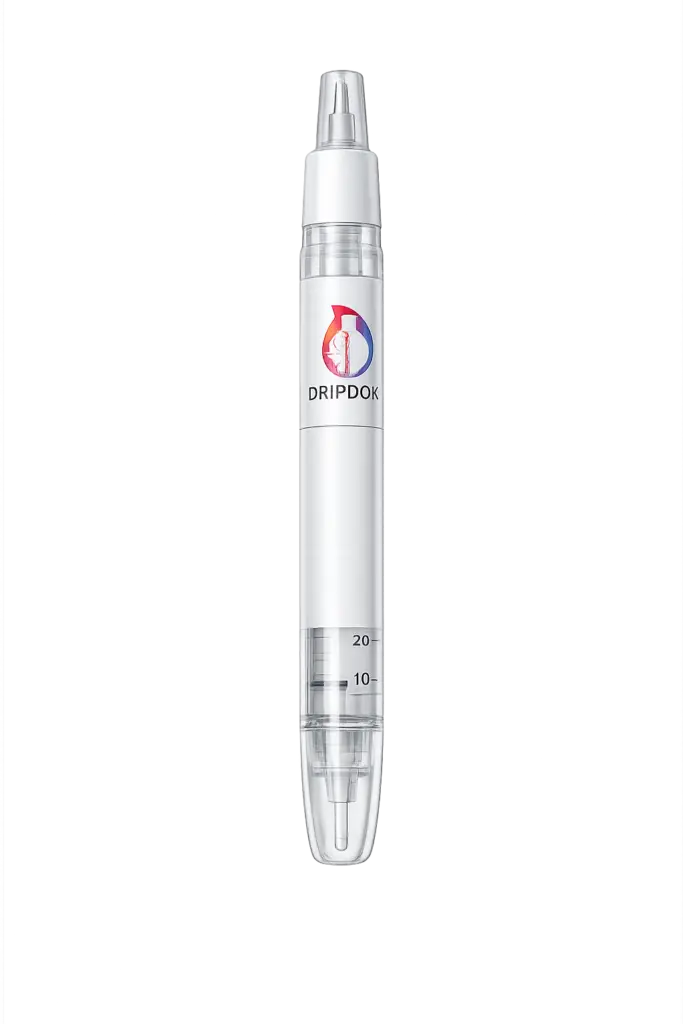
RepairStack™ Pen
Regenerative Polypeptide RP-34 5mg + Cytoskeletal Polypeptide TP-500 5mg · Compounded under USP 797 in clean room · LN₂ cryo-stored · BAC water + physician buffer included · Nurse-trained SC self-injection · 8–12 week cycle · Off-phase physician-specified · HPLC certificate available · Tissue repair, vascular remodelling, gut integrity
GH Optimizer Pen
Ipamorelin/CJC-1295 5mg + Sermorelin 5mg · Sleep-time dosing protocol · Pulsatile GH secretagogue dual mechanism · Compounded and cryo-stored to preserve GH secretagogue thermal stability · Physician intake required · Lean mass, recovery, sleep quality · Pituitary axis sensitivity preserved through cycle structure
NeuroProtect™ Pen
BDNF Peptide Complex A2 30mg + NA-Selank-Amidate 30mg · Amide stability maintained through controlled compounding and cold-chain · BDNF upregulation + HPA axis modulation + anxiolytic neuropeptide signalling · Nasal or SC route determined by physician · Cognitive clarity and neuroprotection — requires intact amide group to be pharmacologically active
Component concentrations are clinically determined by protocol. Physician review is required prior to every session. Formulations may be adjusted based on individual intake assessment.
CLINICAL INDICATION
Protocol Suitability
01
Post-Injury & Musculoskeletal Repair. Individuals recovering from tendon, ligament, joint, or muscle injury requiring targeted structural repair beyond physiotherapy. RepairStack™ (Regenerative Polypeptide RP-34 + Cytoskeletal Polypeptide TP-500) is Dripdok's most prescribed pen protocol — physician dose-set, cycle-structured, and compounded in our USP 797 clean room suite. Physician intake required before dispensing.
02
Cognitive & Neurological Optimisation. Individuals with documented burnout, HPA axis dysregulation, cognitive fatigue, or seeking BDNF pathway support. NeuroProtect™ (BDNF Peptide Complex A2 + NA-Selank-Amidate) operates via TrkB receptor upregulation and anxiolytic neuropeptide signalling. Compounded and stored under conditions that preserve amide stability — not ambient temperature. Neurotransmitter panel informs protocol selection.
03
Longevity, Metabolic & Immune Protocols. GH axis optimisation (GH Optimizer), mitochondrial efficiency (MitoBoost™ — SS-31 requires cardiolipin-targeted delivery and is one of the most storage-sensitive compounds in the formulary), metabolic recomposition (MetabolicReset™ with Tirzepatide), and immune reconstitution (ImmuneShield™). Each requires physician panel data and physician-confirmed protocol before dispensing. Relevant biomarker data mandatory.
CLINICAL OUTCOMES
Observed Treatment Responses
Structural Tissue Repair
Observed accelerated tendon, ligament, and connective tissue recovery in individuals completing full RepairStack™ cycles (Regenerative Polypeptide RP-34 + Cytoskeletal Polypeptide TP-500). Both compounds are pH-stable in the Dripdok delivery vehicle and stored under cryogenic conditions that preserve structural integrity. Reports include reduced joint pain, improved range of motion, and faster return to training. Individual responses vary. Physician-assessed cycle completion required for outcome correlation.
Cognitive Clarity & Neural Protection
Reported improvements in processing speed, focus, and anxiety reduction with NeuroProtect™ (BDNF Peptide Complex A2 + NA-Selank-Amidate). Amide stability is preserved through Dripdok's controlled compounding and storage protocols — degraded amidated analogues do not produce the BDNF-mediated effects documented in the literature. Outcomes are protocol-completion dependent and individually variable.
GH Axis Optimisation
GH Optimizer (Ipamorelin/CJC-1295 + Sermorelin) associated with improved sleep quality, lean mass retention, and recovery kinetics in individuals with confirmed GH axis suboptimality. Pulsatile dosing structure preserves pituitary sensitivity. Peptide stability at the injection pen level is maintained through Dripdok's cold-chain and buffer preparation — GH secretagogues are particularly vulnerable to thermal degradation prior to administration.
Clinical outcomes are individual and may vary based on baseline nutritional status, health history, and protocol frequency. These are reported observations, not therapeutic guarantees. This protocol does not constitute medical treatment for any specific condition. All sessions are physician-reviewed for safety and clinical appropriateness prior to confirmation.
WHY DRIPDOK
A Physician-Founded System. Not an IV Menu.
DripDok was established in 2017 by a US-trained physician with academic foundations in molecular genetics, analytical chemistry, and biotechnology — and is associated with research through Purdue, Harvard, MIT, and Michigan State University. As the first clinic in Southeast Asia to offer advanced NAD+ IV protocols, DripDok operates as a precision medicine system, not a retail infusion bar. Every protocol is governed by diagnostic-first methodology, cold-chain sourcing standards, and formal physician oversight — applied to every client, every session.
BEGIN YOUR PROTOCOL
How to Book a Session
Your Patient Relations team coordinator reviews your request and sends a secure payment link via Wise, Stripe, or local transfer. After payment, you complete a medical intake and consent form. Your physician reviews it for clinical suitability, then confirms your appointment. Standard protocols require 24–48 hours advance notice for nurse scheduling and cold-chain preparation.